How to Reduce Loom Downtime in Weaving Mills Using Real-Time Monitoring
Introduction:
If you work in a weaving mill, you know how it feels when everything is running smoothly, the looms are humming, the team is energized, and production is on track. But all it takes is one machine stoppage to throw off the whole day. Loom downtime isn’t just a technical problem, it’s a real challenge that every textile mill faces, affecting your team’s morale and the factory’s bottom line.
Frequent machine stoppages reduce loom efficiency, slow down weaving factory production and directly affect overall textile mill productivity. Even small machine stoppages repeated throughout the day can lead to significant production loss.
Many textile factory owners try to solve this problem by increasing manpower or installing additional looms. But in reality, improving machine monitoring and production visibility often has a much bigger impact.
Today, many modern weaving mills are reducing downtime by using real-time monitoring systems that track machine performance and provide production insights.
Industry Problems
1. Frequent Yarn Breakage
2. Machine Maintenance Issues
3. Lack of Production Monitoring
4. Slow Operator Response
Solutions / Tips
1. Improve Loom Maintenance
Treat your machines like part of the team. Set up a regular maintenance schedule, involve your operators in spotting wear-and-tear, and don’t wait for a breakdown to fix things. A little care every day goes a long way.
Factories should schedule preventive maintenance activities such as:
- checking machine components
- lubricating moving parts
- inspecting sensors and electronics
- replacing worn-out parts
Proper maintenance ensures machines run smoothly and improves loom efficiency.
2. Maintain Yarn Quality
Think of yarn as the lifeblood of your weaving operation. Make it a habit to inspect every batch, store it right, and set the right tension. Good yarn means fewer headaches and more fabric out the door.
Textile mills should ensure:
- proper yarn inspection before production
- correct warp tension settings
- proper yarn storage conditions
Good yarn quality helps machines run continuously and improves weaving factory production.
3. Train Machine Operators
Your operators are your front line. Invest in their training, encourage them to speak up about issues, and celebrate when they spot and fix problems fast. The more confident your team feels, the quicker downtime gets solved.
Factories should train operators to:
- detect machine problems early
- respond quickly to loom stoppages
- maintain proper machine settings
Well-trained operators help reduce downtime and improve textile mill productivity.
4. Improve Production Monitoring
Imagine knowing exactly which loom stopped, when, and why, with no guesswork. Real-time monitoring puts that power in your hands, helping you and your team solve issues before they pile up.
Without proper data, it is difficult to understand why machines stop frequently. Better monitoring helps identify problems quickly and improve loom efficiency.
Real Factory Example
Consider a weaving mill operating 180 looms . If each loom experiences around 20 minutes of downtime per day, the factory loses a significant amount of production time.
In many cases, factory managers are not even aware of the exact causes of these stoppages. However, when the factory starts tracking machine performance and identifying downtime causes, several improvements can be made.
For example:
- fixing frequent yarn breakage issues
- improving operator response time
- resolving machine maintenance problems
With these improvements, loom downtime can be reduced significantly. Even a 5–8% improvement in loom efficiency can increase weaving factory production without installing new machines.
Technology Solution
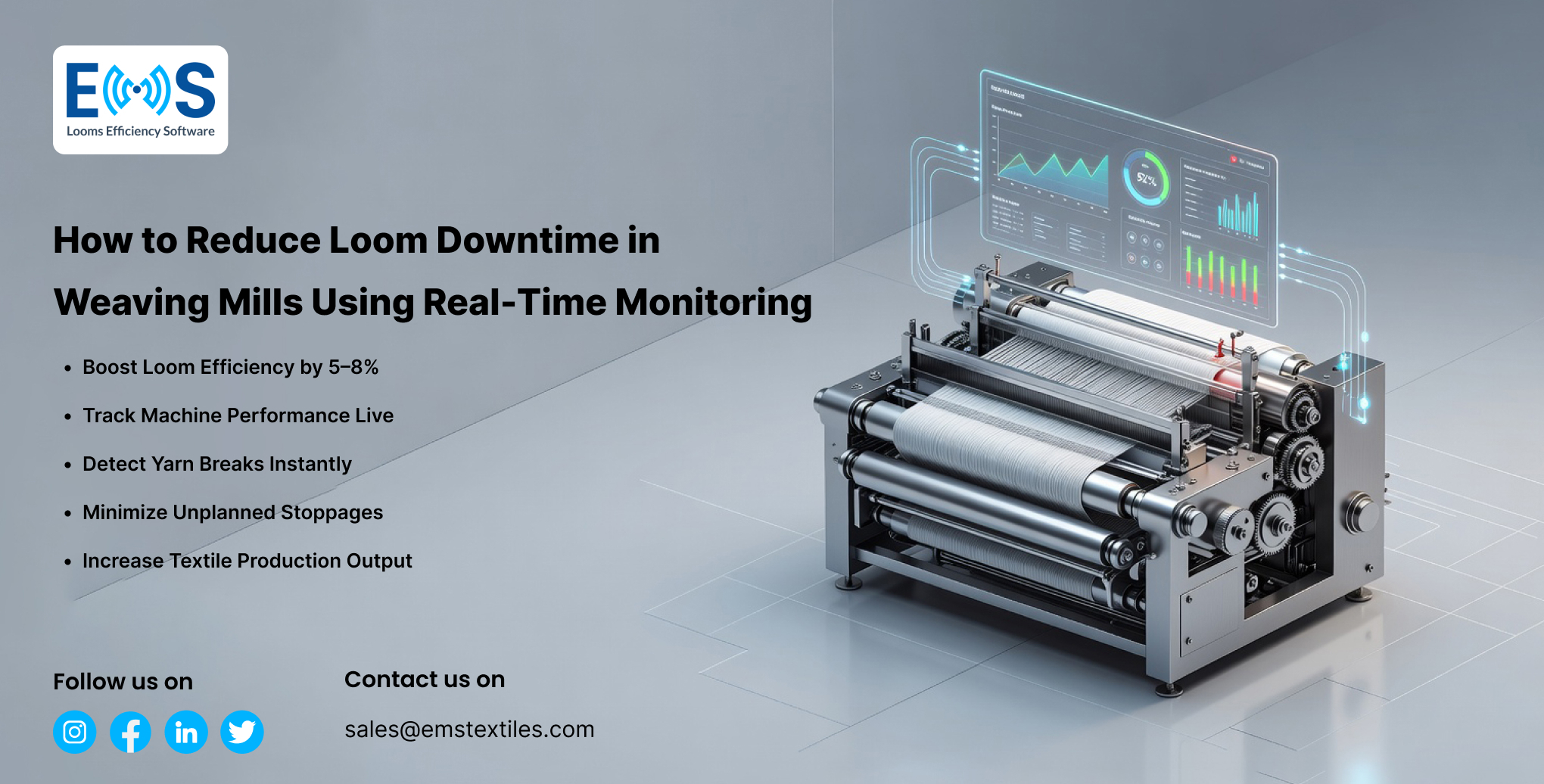
Digital monitoring systems aren’t just about numbers they give your whole team the insight to keep production moving. With live dashboards, everyone knows what’s happening, and you can celebrate wins together when downtime drops.
This system helps factory managers monitor the following:
- loom efficiency
- machine running status
- stop causes
- production output per loom
With this information, factories can quickly identify machines with frequent stoppages. For example, if a particular loom stops repeatedly due to yarn breakage or mechanical issues, the problem can be addressed immediately.
Real-time monitoring helps factories:
- reduce loom downtime
- improve machine utilization
- increase textile mill productivity
By using digital monitoring systems, textile mills gain better control over their production process.
Conclusion
Loom downtime can feel like an endless battle, but with the right habits, tools, and teamwork, it’s a challenge you can beat. Focus on maintenance, yarn quality, operator training, and most importantly, use real-time monitoring to see and solve problems right away. With everyone working together, your weaving mill can run smoother than ever.
Factories that adopt real-time monitoring systems gain better visibility into their production operations and can quickly identify issues affecting weaving factory production.
By improving monitoring and machine management, weaving mills can increase production without adding new machines.