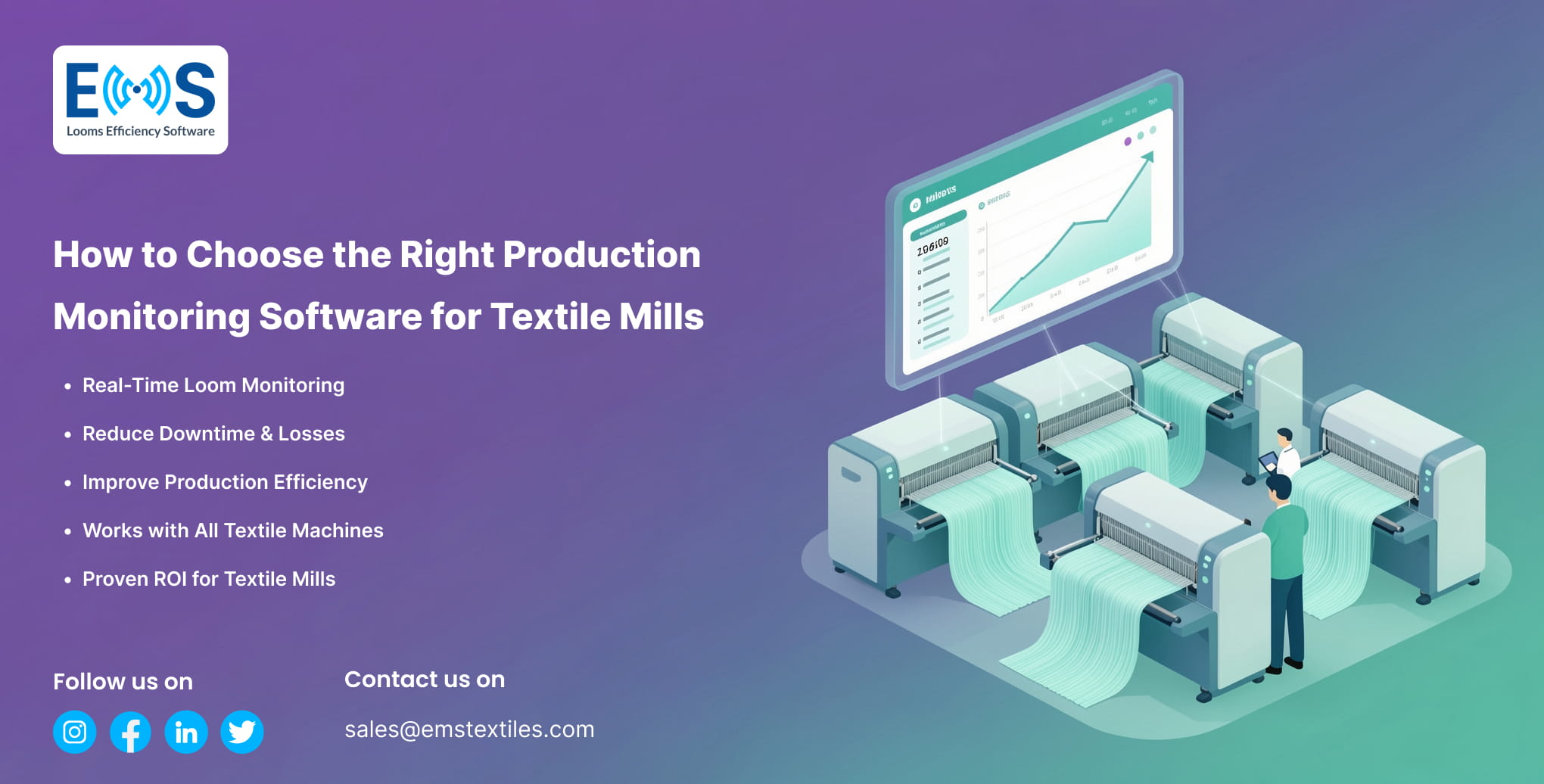
How to Choose the Right Production Monitoring Software for Textile Mills
Introduction: Don’t Just Buy Software - Buy Results
If you manage a textile mill, you know the challenges: delays, downtime, and endless paperwork can quietly eat away at your profits. Maybe you’ve heard about production monitoring software for textile mills and wondered if it’s worth the investment or how to make the right choice.
The reality? Buying a textile production monitoring system isn’t just about getting a shiny dashboard or the latest tech buzzwords. It’s about choosing a solution that actually solves your real-world problems on the shop floor and delivers a solid return on investment.
This guide is for you – the mill owner or manager who wants practical answers, not sales pitches. Here’s what you need to know to confidently select the right textile mill monitoring system and avoid common mistakes.
1. Start With Your Biggest Problem - Not the Software
Before you even look at a loom monitoring system or demo a single textile production software, ask yourself:
What do I actually want to fix?
- Is loom downtime your biggest headache?
- Are manual reports causing confusion?
- Do you need real-time production monitoring of textile data to spot issues faster?
- Is operator accountability a problem?
If you’re clear on your pain points, it’s much easier to judge if a textile production monitoring system will genuinely help.
2. Compare Vendors - Don’t Fall for the Hype
Let’s be honest: every supplier claims to be “industry-leading” or “cutting-edge.” But here’s what really matters when choosing a textile mill monitoring system:
- Experience in Textile: Have they worked with mills like yours, or are they general software sellers?
- Machine Compatibility: Will their system work with your existing looms even older or mixed brands?
- Implementation Time: How long until you’re up and running? Can you avoid production disruptions?
- Support Quality: Is there on-site help? How quickly do they respond when you need it?
- Proof: Can they connect you to real customers? Are there case studies from mills with similar setups?
Don’t just trust a slick sales demo – ask for real-life evidence.
3. Features That Truly Matter
You don’t need complex analytics or AI hype. Focus on features that drive results in daily mill life:
- Real-Time Machine Monitoring: See live data for every loom.
- Downtime Tracking with Reasons: Know exactly why a machine stopped.
- Shift- and Loom-wise Reporting: Drill down to the details that matter.
- User-Friendly Dashboards: For desktop and mobile – your team must actually enjoy using them!
- Alerts & Notifications: Fix issues before they snowball.
Remember: A textile production monitoring system that’s easy to use will always outperform one that’s too complicated.
4. Red Flags to Watch For
Don’t get burned by common mistakes. Be wary if you see:
- “One-size-fits-all” solutions meant for any industry (textile industry automation needs specific expertise!)
- No live demo – just presentations
- Confusing, cluttered interfaces
- Vague or hidden pricing
- Weak, hard-to-reach support teams
5. Essential Questions to Ask Every Vendor
Before signing anything, grill your shortlisted vendors with these:
- Is your textile production software truly real-time?
- Can it integrate with my current machines?
- How long does installation take? Will it disrupt operations?
- What training do you offer for my team?
- How do you support us if there are technical problems?
- What reports will I see daily?
- How is downtime tracked and reported?
- What’s the all-in cost including hardware?
If a vendor can’t answer these clearly and confidently, keep looking!
6. Calculating ROI - Will the System Pay for Itself?
Do the math. Example:
- Your mill: 50 looms, 2 hours daily downtime, ₹100 loss per loom per hour.
- Daily loss: 50 × 2 × ₹100 = ₹10,000
- Monthly loss: ₹3,00,000
If a loom monitoring system cuts downtime by 20%, you save ₹60,000/month.
If the system costs ₹3,00,000, it pays for itself in just 5 months and keeps saving you money for years.
7. Think Scalability (Don’t Box Yourself In)
Your mill might grow or you might want to add more units in the future. Make sure your textile production monitoring system can scale up, not just handle your current needs.
Today: 20 looms
Tomorrow: 100 looms
Your textile monitoring software should:
- Scale easily
- Support multiple units
- Provide centralised data
Changing software later = costly mistake
8. Never Underestimate Ease of Use
If supervisors and operators find your textile mill’s monitoring system confusing, they’ll avoid it or worse, revert to manual tracking. Insist on:
- Simple design
- Quick, effective training
- Mobile and desktop support
The easier it is for your team, the more value you’ll get.
9. The Reality of Implementation - Change Takes Support
No matter how good the software is, some team members will resist at first. A great vendor doesn’t just “install and disappear”; they train, support, and help you transition smoothly to a new way of working.
10. Your Final Checklist Before You Decide
If a textile production software provider can honestly check all these boxes, you’re on the right track:
- Real-time production monitoring of textile data
- Compatibility with all your machines
- Detailed downtime tracking
- Easy-to-use dashboards
- Textile-specific reports and analytics
- Responsive support team
- Clear, provable ROI
- Room to scale as you grow
Conclusion: Right Software = Higher Profit
Choosing the right production monitoring software for textile mills is not about technology – it’s about business growth.
The right system helps you:
- Reduce downtime
- Increase production
- Improve efficiency
- Make faster decisions
In today’s textile industry, mills using real-time data will always outperform those using manual systems.
Want to see how much downtime your mill can reduce?
- Get a free demo for your textile mill
- Receive a custom ROI calculation based on your looms
- See live production tracking in action
Contact us today and take the first step toward smarter manufacturing.